I. variations on the hydrangea fractal
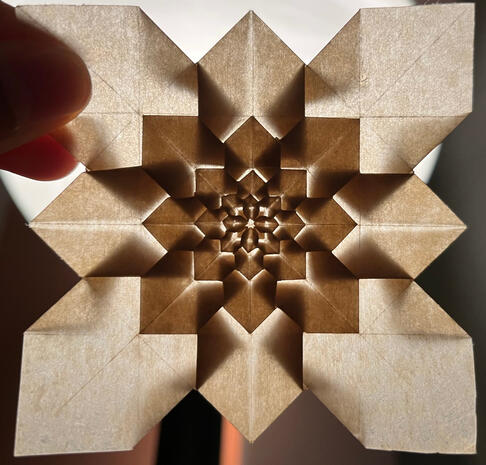
8 layers, backlit
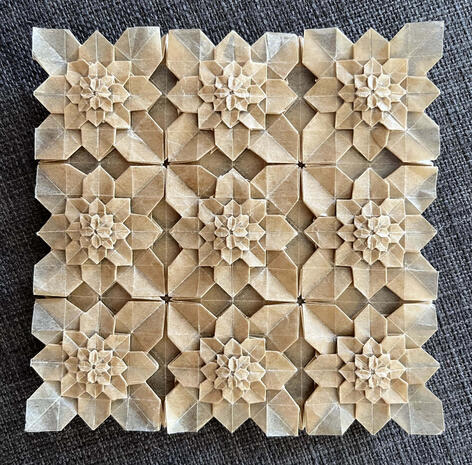
6 layers, 9 tiles
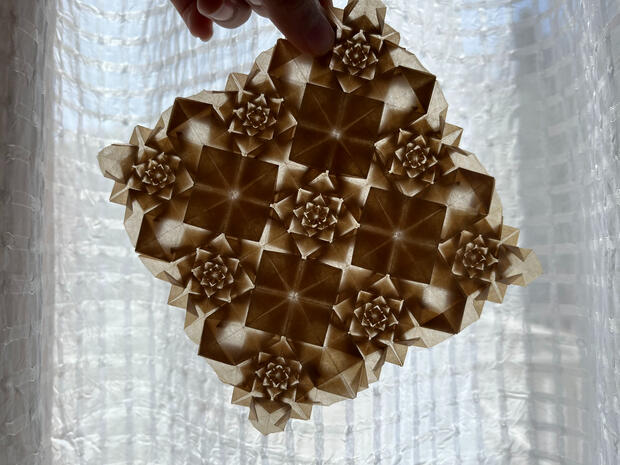
6 layers, 9 tiles, backlit
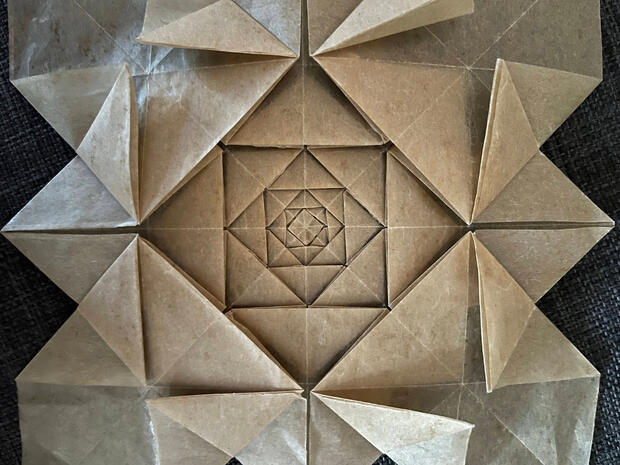
9 layers, side 2
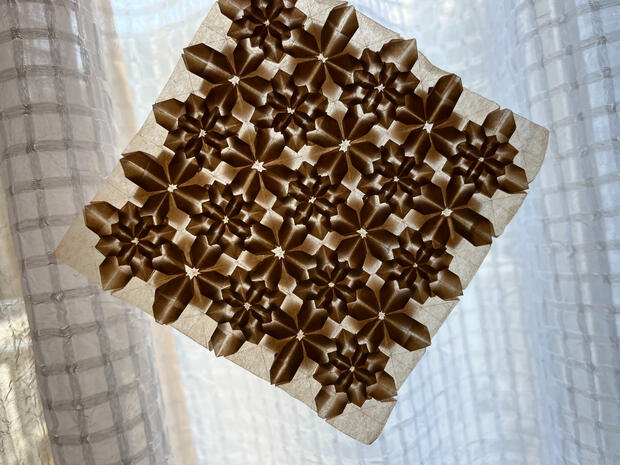
2 layers, 13 tiles, backlit
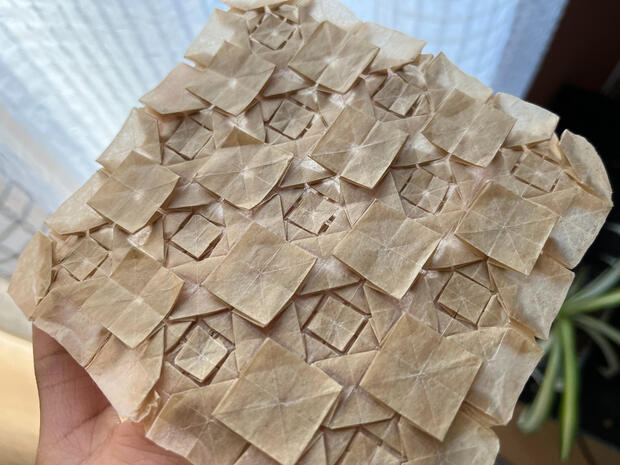
2 layers, 13 tiles, side 2
II. tessellations
![sine wave [me]](images/sineWave.jpg)
sine wave [me]
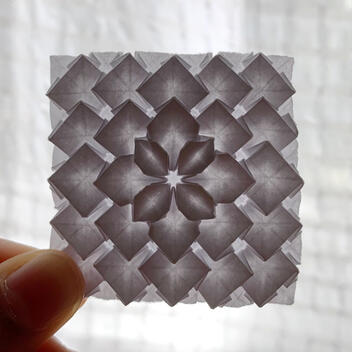
hydrangea/clover
![naval shell [tomoko fuse]](images/navalShell.jpg)
naval shell [tomoko fuse]
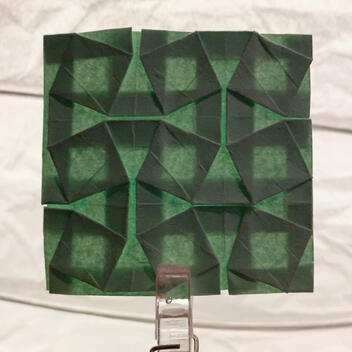
square weave
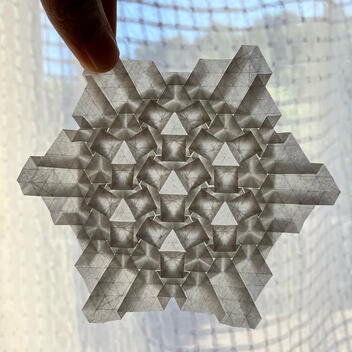
triphilia backlit
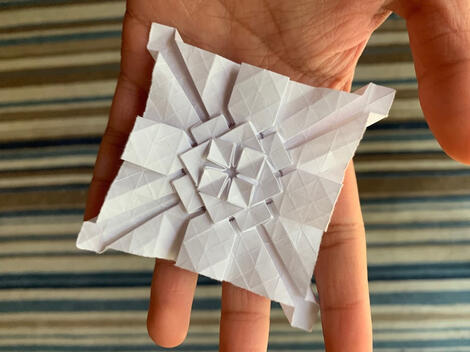
clover variation
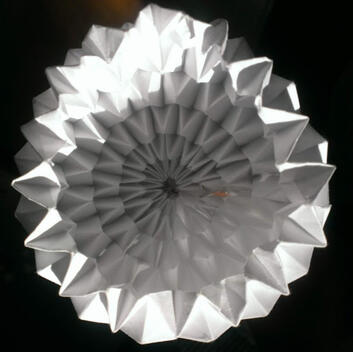
magic ball
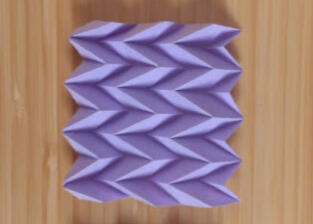
herringbone corrugation
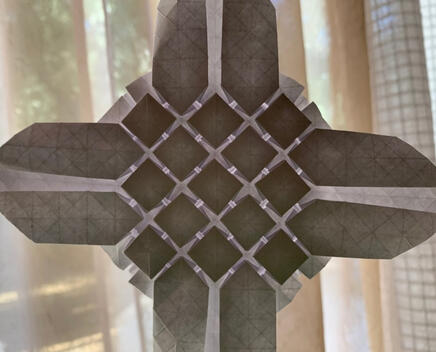
flattened clovers
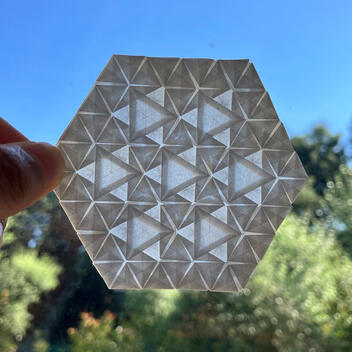
triphilia II
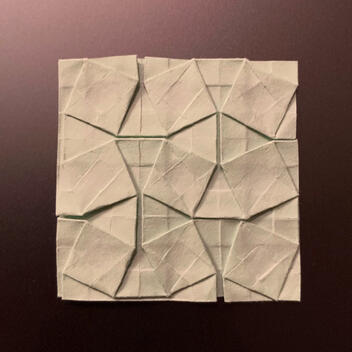
square weave 2
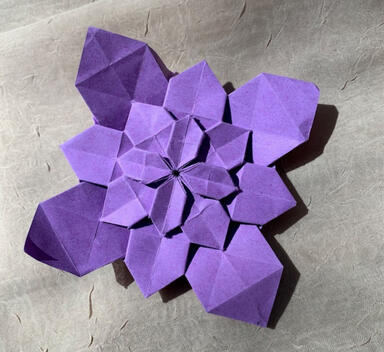
3-layer hydrangea
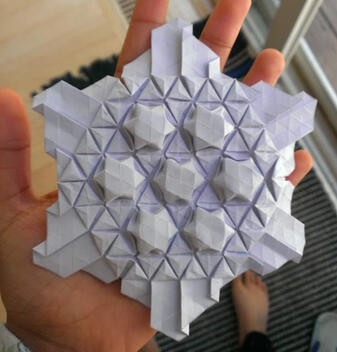
star puff tessellation
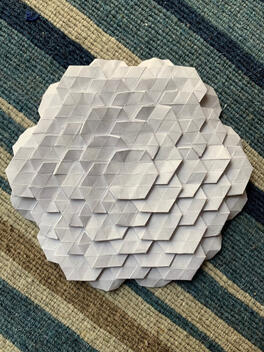
spread hexagons
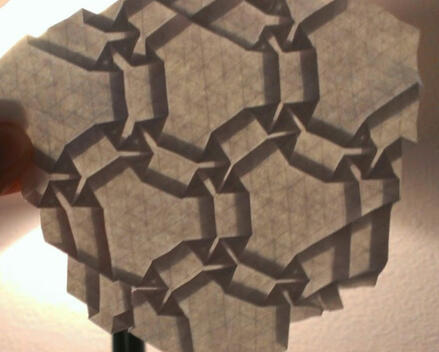
triangle weave
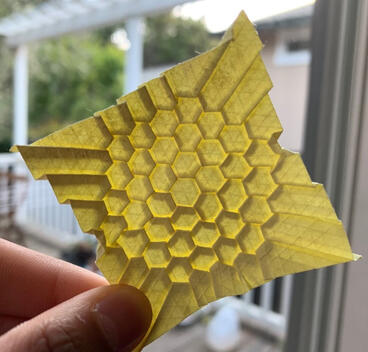
post-it spread hexagons
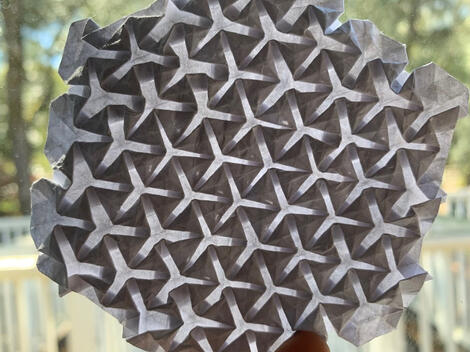
triangles
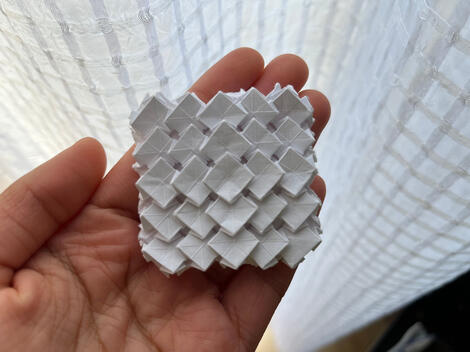
5x clover field
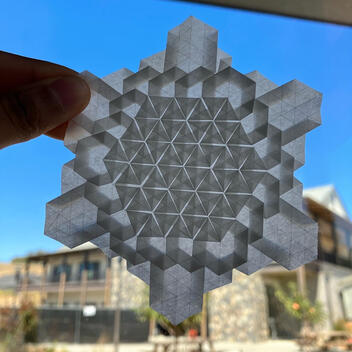
combo tri/hex
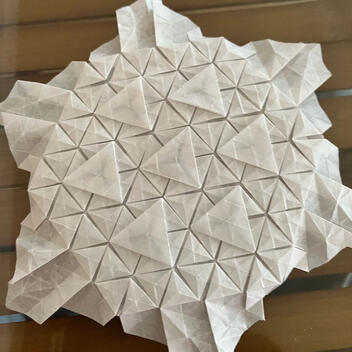
7 triangles
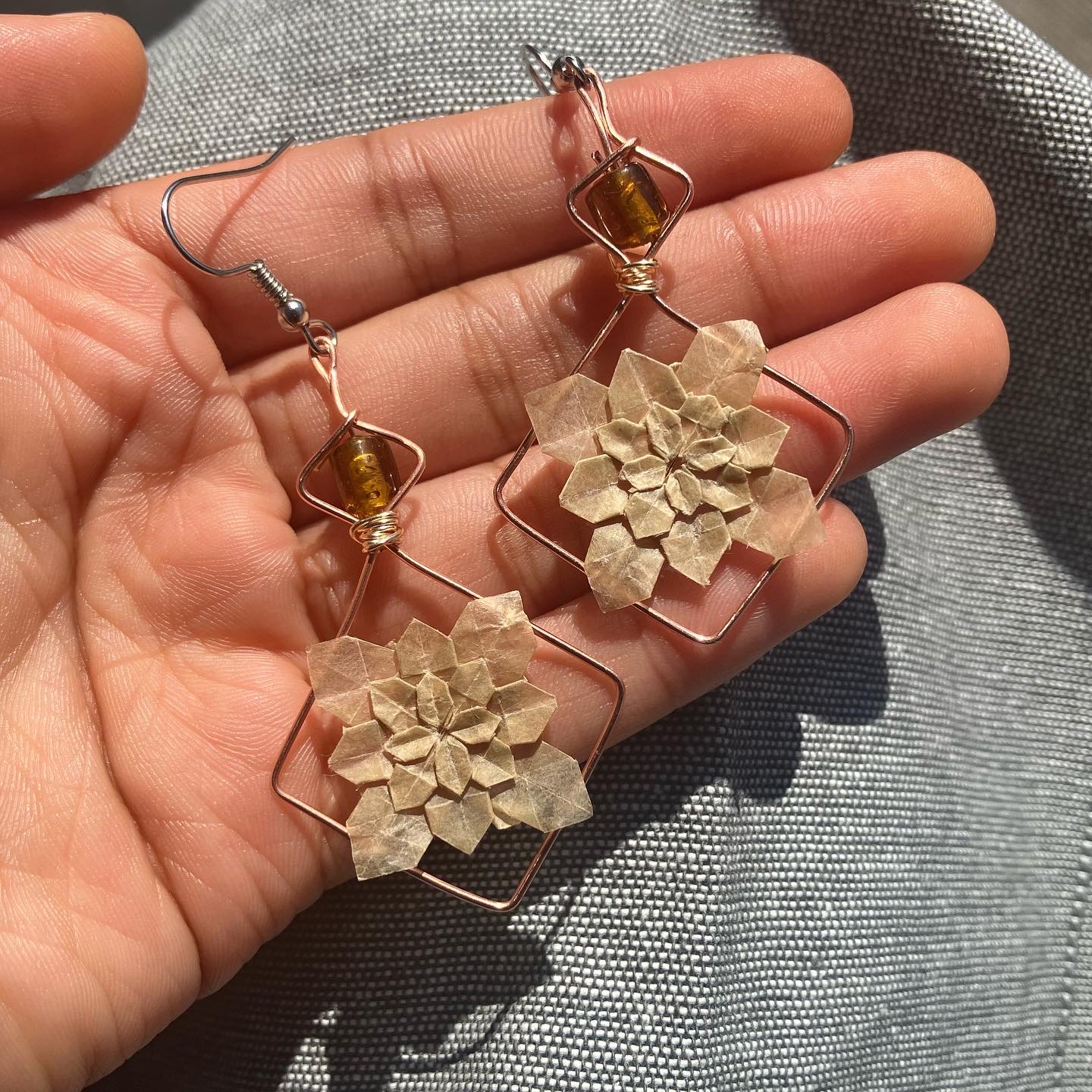
hydrangea earrings
III. additional models
![miku [陳曉]](images/miku.jpg)
miku [陳曉]
![tico star [maria sinayskaya]](images/ticoStar.jpg)
tico star [maria sinayskaya]
![blm letters [jo nakashima]](images/blm.jpg)
blm letters [jo nakashima]
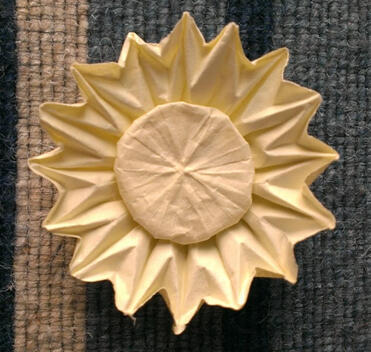
sunflower
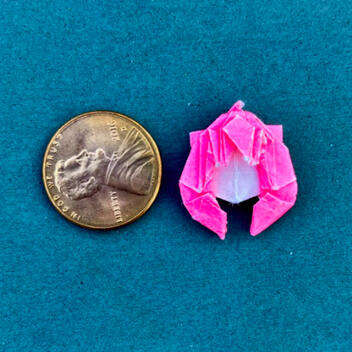
micro origami anya
frequently asked questionsare they all folded from a single sheet?
- yes, except the tico
starhow long does it take to fold?
- most models on this page
took an average of one hour to fold, but the hydrangeas took 5-9 hours in totalwhat paper do you use?
- printer paper, regular origami paper, and even
sticky notes for less complex models, and sandwich paper for more complex modelshow do you learn origami?
- internet research and practicewhen were these folded?
- 2019 to present
check out these origami artists that inspire me:陳曉 (chen xiao)the plant psychologist (brandon wong)arsenikoomkamiya satoshitomoko fuseeric gjerde & ilan garibimorisue kei
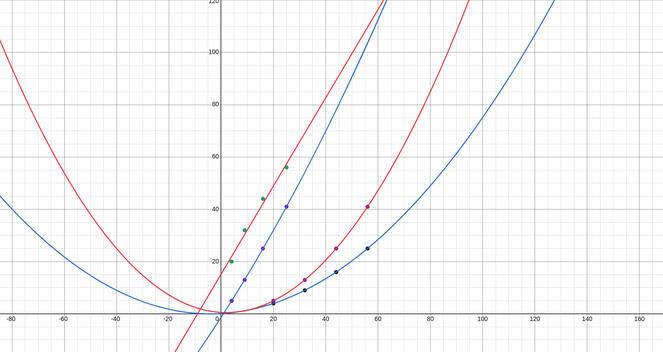
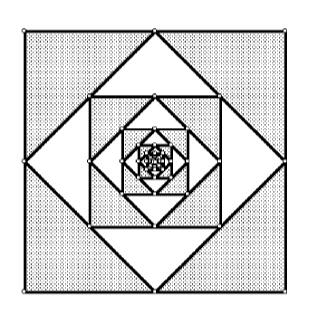
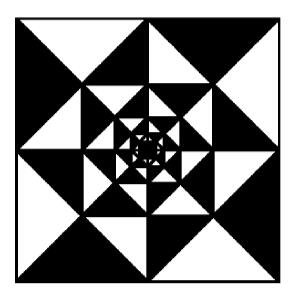
math behind the hydrangeas : fractals and geometric sequencesFor the 9-tiled, 6 layer hydrangea: the relationship between the number of bases creased, y, and the grid size, x, can be modeled byy = (1/144)x^2 + (5/9)x + (1/9)Individual hydrangea units are perfect fractals consisting of squares rotated 45° and set inside the previous square. Therefore, the perimeter of each subsequent square is represented byan = (sqrt2/2) to the (n-1)where n is the layer number and an is the perimeter.
computational origami : a branch of
computer science involving modeling origami with algorithmsResources to lean
more:Robert J. Lang
Origami
Tomohiro Tachi
Amanda Ghassei's Origami Simulator
Xinyi LiuSoftware I use to draw, model,
and
simulate crease patterns: Oriedita